

What Is Private Label Chemical Manufacturing?
Private label chemical manufacturing is the production of chemical products that are marketed and sold under another company’s brand.
The private label company owns the customer relationship and market positioning. The chemical manufacturer handles defined portions of product development and production. Depending on the project, that work may include:
- Reviewing an existing formula or product specification
- Developing or modifying a chemical formulation
- Evaluating samples
- Conducting laboratory testing
- Sourcing and managing raw materials
- Blending the finished chemistry
- Establishing quality and production requirements
- Filling and packaging the product
- Applying customer-approved labels
- Supporting pilot, recurring, or bulk production
Private label manufacturing is not limited to repackaging an existing chemical. Some programs begin with a finished formula. Others require technical development before the product is ready for production. The first step is determining what already exists, what still needs to be developed, and what the finished product must accomplish.
When Private Label Chemical Manufacturing Makes Sense
Private label chemical manufacturing makes sense when a company sees a viable product or market opportunity but does not have the internal infrastructure to manufacture the chemistry consistently. Common situations include:
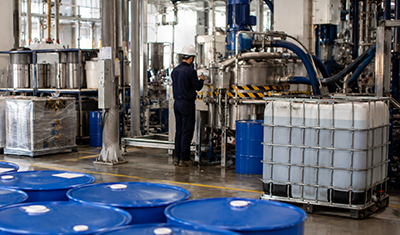
Expanding an Existing Product Line
A distributor, equipment supplier, maintenance company, or industrial service provider may want to add branded chemicals that complement its current products.
For example, a company serving metalworking operations may identify demand for cleaners, process fluids, corrosion protection products, or maintenance chemicals. Private label production allows the company to enter that category without building a chemical plant.
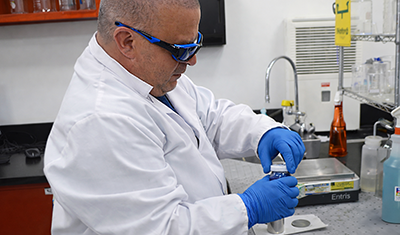
Commercializing a Developed Formula
An R&D group may have a formula that performs correctly in laboratory or pilot conditions but lacks commercial-scale production capacity.
The next challenge is not necessarily chemistry development. It is converting that formula into a repeatable manufacturing process with defined raw materials, batch procedures, quality requirements, packaging, and supply expectations.

Replacing Inconsistent Contract Production
Private label programs are difficult when product quality, delivery, or communication is inconsistent. Changing manufacturers is appropriate when you have:
- Inconsistent product quality (varied viscosity, pH, appearance, etc.)
- Unreliable lead times
- Packaging issues
- Limited technical support
- Poor production visibility
- Difficulty scaling volume

Entering a Specialized Industrial Market
Specialty industrial products often serve narrow applications where performance depends on equipment, materials, contaminants, temperature, friction, residue, or downstream process requirements.
A company entering one of these markets needs more than general chemical production capacity. It needs a manufacturer that understands how chemistry interacts with the actual application.
Private Label Manufacturing vs. Toll Blending
Private label manufacturing and toll blending both involve outsourced chemical production, but they solve different commercial needs.
| Service | Primary Purpose | Typical Starting Point | Finished Product |
|---|---|---|---|
| Private label chemical manufacturing | Create a chemical product sold under the customer’s brand | Existing product, specification, sample, performance requirement, or market concept | Branded and packaged chemical product |
| Toll blending | Outsource the production of defined chemistry | Established formula and production specification | Chemical produced to agreed requirements |
| Custom chemical blending | Manufacture a blend around defined process or performance needs | Formula, application requirement, or production need | Specialized finished chemical |
| Custom chemical formulation | Develop or modify the chemistry itself | Performance problem or product-development target | Tested formulation ready for the next development or production stage |
| Bulk chemical tolling | Outsource recurring commercial-scale production | Established chemistry and defined volume requirements | Repeat bulk production and supply |
A project may use several of these capabilities. A private label program can begin with custom formulation, move into pilot-scale custom blending, and eventually become a recurring toll blending or bulk production program. The terms describe different parts of the development and manufacturing path, not necessarily separate relationships.
What a Private Label Chemical Manufacturer Should Evaluate
The manufacturer should understand both the product and the business requirements behind it.
Intended Application
The same general type of chemical can behave differently across materials, equipment, contaminants, and operating conditions. A manufacturer should understand:
- What the product must do
- Where it will be used
- Which materials it will contact
- How it will be applied
- Which soils, residues, coatings, or process materials are involved
- What happens before and after the chemical is used
- Which performance problems must be avoided
This information keeps the technical conversation focused on the real application rather than a generic product category.
Formulation Status
The development path depends on how complete the chemistry is. A company may bring:
- A finished formula
- A target specification
- An existing product that needs to be reproduced or improved
- A sample requiring analysis
- A product concept with defined performance goals
- An established private label product being transferred from another manufacturer
A finished formula can move toward a production review. An incomplete product may require formulation work, testing, sample evaluation, or application simulation before manufacturing begins. PICO supports both customer-defined chemistry and projects that require custom formulation or laboratory evaluation before production.
Performance Requirements
“Industrial cleaner,” “metalworking fluid,” or “coating remover” does not provide enough technical direction by itself. The manufacturer needs specific expectations. Those expectations involve:
- Cleaning effectiveness
- Lubrication or cooling performance
- Residue characteristics
- Surface protection
- Corrosion control
- Foam behavior
- Stability
- Compatibility
- Adhesion performance
- Ease of rinsing or removal
- Appearance, odor, pH, or viscosity requirements
The relevant requirements depend on the application. They should be defined before the program moves into recurring production.
Production Volume
Volume affects raw material procurement, batch planning, production scheduling, packaging, inventory, and freight. The manufacturer should understand:
- Initial order volume
- Expected recurring demand
- Seasonal or promotional demand
- Forecasted growth
- Minimum practical production quantities
- Storage and inventory expectations
- Whether pilot production is required
At PICO, our production capabilities extend from pilot quantities through commercial-scale chemical manufacturing. Available packaging formats include pails, drums, totes, and bulk supply, depending on the project.
Packaging and Labeling
Packaging is part of product performance and market readiness. The correct container depends on:
- Product chemistry
- Container compatibility
- Customer handling practices
- Shipping requirements
- Storage conditions
- Dispensing methods
- Sales channel
- Order volume
- End-user expectations
Labeling requirements must also be established before production. The customer and manufacturer need a defined approval process for brand elements, product identification, required information, and production-ready artwork. No chemical product should be marketed or handled based on label copy alone. Appropriate product documentation and safety information must be addressed for the specific program.
The Private Label Chemical Manufacturing Process
Every project has different technical requirements, but a structured private label program generally follows several stages.
1. Initial Product and Application Review
The process begins with a technical and commercial discussion. We need to understand:
- The product concept or existing formulation
- The intended customer and application
- Required product performance
- Current development status
- Expected volume
- Packaging preferences
- Labeling requirements
- Target production timeline
- Known technical or supply constraints
This review helps determine whether the project should begin with formulation, testing, pilot production, a manufacturing transfer, or a direct production assessment.
2. Formula or Sample Evaluation
When the chemistry is not fully established, laboratory work may be needed. PICO’s in-house capabilities include compatibility and stability evaluation, particle size measurement, pH and viscosity testing, residue or scale analysis, application simulation where applicable, and product validation. The correct testing plan depends on the technical questions behind the product. Testing does not replace clear application requirements. It helps evaluate whether the chemistry meets them.
3. Production Planning
A formula that works in development still needs a practical manufacturing process. Production planning addresses:
- Raw material specifications
- Order of addition
- Mixing and processing requirements
- Batch size
- In-process checks
- Finished-product specifications
- Traceability
- Container and closure requirements
- Label application
- Production records
- Storage and delivery expectations
These details support repeatability as the product moves from development into recurring production.
4. Pilot or Initial Production
An initial production run creates an opportunity to confirm that the formula, manufacturing process, quality requirements, and packaging work together. Pilot production can reveal issues that may not appear in small laboratory samples, including:
- Mixing behavior
- Raw material handling requirements
- Batch timing
- Packaging compatibility
- Fill consistency
- Finished-product appearance
- Scale-related stability concerns
The appropriate validation process depends on the chemistry and intended application.
5. Recurring Manufacturing
Once the program is established, the focus shifts to consistency and supply continuity.
Recurring private label manufacturing should be built around:
- Approved raw materials
- Defined production procedures
- Agreed quality requirements
- Clear order and scheduling processes
- Repeatable packaging and labeling
- Finished-product traceability
- Direct communication when requirements change
Private label manufacturing works best as an ongoing operating relationship, not a series of disconnected purchase orders.
Questions to Ask a Private Label Chemical Manufacturer
Choosing a manufacturer based only on unit price creates unnecessary risk. The lowest quoted price has limited value if the finished product creates complaints, delays, rework, or lost customers.
Ask prospective manufacturers:
- Do you understand the product’s industrial application?
- Can you work with an existing formula?
- Can you support formulation when the chemistry is incomplete?
- What laboratory testing is available?
- Can you support pilot production?
- Which packaging formats can you handle?
- How are specifications and quality requirements documented?
- What production traceability is maintained?
- Can the program scale as demand changes?
- Who handles technical questions after the product launches?
- How are formula changes and substitutions controlled?
- What information is required before the project can be quoted?
The answers should demonstrate a defined process.
Common Private Label Manufacturing Mistakes
Starting With Branding Instead of Performance
A label cannot compensate for chemistry that does not work. Define the application, performance requirements, and product limitations before finalizing sales claims or packaging language.
Assuming an Existing Formula Is Production-Ready
Laboratory success does not automatically translate into commercial production. Scale can affect mixing, heat transfer, raw material incorporation, stability, processing time, and finished-product consistency. Production requirements must be evaluated before volume increases.
Ignoring Packaging Compatibility
The chemical and container function as a system. Container material, closure, liner, fill volume, storage conditions, and dispensing method must fit the finished chemistry and customer use.
Underestimating Forecasting
Poor volume planning can create raw material constraints, packaging shortages, excess inventory, or missed delivery expectations. Forecasts do not need to be perfect. They do need to give the manufacturer enough information to plan responsibly.
Treating the Manufacturer as a Commodity Vendor
Private label production affects product quality, customer retention, supply continuity, and brand reputation. The relationship should include technical communication, production planning, and clear ownership of requirements.
Industrial Products That Fit a Private Label Program
The correct fit depends on formulation, production requirements, volume, and application. Private label manufacturing may support industrial product categories such as:
- Machining and metalworking fluids
- Metal forming lubricants
- Industrial cleaners and degreasers
- Tank and equipment cleaners
- Paint, ink, and coating removers
- Rust and surface protection products
- Cutting table fluids
- Steel production and maintenance fluids
- Adhesion promoters
- Specialized industrial maintenance chemicals
PICO currently manufactures products across these broader industrial chemical and specialty fluid categories. A private label request still requires individual technical and production review.
For more information on PICO products, find industrial chemical product line cards and/or request SDS or TDS documentation.
Private Label Chemical Manufacturing With PICO
We approach private label chemical manufacturing as both a technical program and a production responsibility. Some customers come to us with established chemistry that needs a dependable manufacturing home. Others have a product concept, performance requirement, or sample that still needs technical development.
We formulate, blend, and package industrial and specialty chemicals at our Chicago Heights, Illinois, facility. PICO has manufactured industrial chemistry since 1976 and operates under an ISO 9001:2015-certified quality management system. Learn more about PICO Chemical’s manufacturing experience.
Contact us today with your custom chemical needs.
Frequently Asked Questions About Private Label Chemical Manufacturing
A private label chemical product is manufactured by one company and marketed under another company’s brand. The manufacturing partner may provide blending, formulation, testing, filling, packaging, labeling, or related production support. The scope depends on whether the customer already has a finished formula or needs help developing the product.
No. A private label program can begin with an established formula, a product specification, an existing sample, or defined performance requirements. When the formulation is incomplete, custom development and laboratory testing may be required before the product moves into production.
Yes, when the product, formula, raw materials, specifications, packaging, and production requirements can be properly reviewed. A manufacturing transfer should account for more than the formula. Processing steps, quality controls, historical performance concerns, approved materials, containers, and forecasted volumes also matter.
The terms are sometimes used interchangeably. White label commonly refers to an established product offered to multiple companies under different brands. Private label may involve a product, formula, packaging format, or program developed for a specific customer. The exact distinction depends on the manufacturer and commercial arrangement.
Pilot or smaller initial production may be appropriate when the chemistry, packaging, or market demand still requires validation. Feasibility depends on the formulation, raw materials, processing requirements, packaging, and practical batch size. PICO reviews those factors before defining a production path.
It can. PICO’s private label capabilities can include blending, labeling, packaging, and production support. The final scope must be established for the individual project, including container format, label requirements, artwork approval, documentation, and expected volume.
The production path depends on the readiness of the product. A finished formula with established raw materials, specifications, and packaging requires a different review than a new product needing formulation and testing. The manufacturer must evaluate technical requirements, material availability, batch needs, labeling, packaging, and production scheduling before establishing timing.
Provide the intended application, current formulation status, required performance, expected volume, packaging needs, target market, and any known technical concerns. Include the existing formula, specification, or sample when available. This information helps determine whether the next step is formulation, testing, pilot work, a manufacturing review, or a production discussion.
Build the Manufacturing Program Before Building Demand
A successful private label chemical program starts with chemistry that fits the application and a production process that can deliver it consistently.
Before investing heavily in branding, sales, or distribution, establish the product requirements, manufacturing path, quality expectations, packaging, and supply plan. That foundation protects both the customer using the product and the company whose name appears on it.
When you are ready to evaluate a private label industrial chemical product, tell us what you are building, where the chemistry stands today, and what the finished product must accomplish. We will review the requirements and determine the appropriate technical and production path.
