

What Are Custom Chemical Formulation Services?
Custom chemical formulation services involve developing or modifying industrial chemistry around a specific process, performance requirement, or application.
That sounds straightforward, but effective formulation work requires more than asking for a “better cleaner” or a “stronger lubricant.” We start with the process. What does the chemistry need to accomplish? Where is the current product falling short? Which materials does it contact? What happens before and after the chemical is used?
Depending on the application, we may need to understand:
- The performance you need from the chemistry
- The problem you are experiencing today
- The materials and surfaces involved
- The equipment used in the process
- How the chemistry is applied
- What contamination, residue, heat, or friction is present
- What happens downstream
- How the product will eventually need to be produced and supplied
These details matter because a chemical that performs well in one operation may behave very differently in another. The equipment may be different, or the substrate may be different. The contamination may be harder to remove. Heat, contact time, mechanical action, or downstream requirements may change the entire formulation strategy. We develop custom industrial chemistry around the conditions that actually exist in your operation.
When Should You Consider Custom Chemical Formulation?
Custom formulation becomes worth exploring when the chemistry itself appears to be limiting the process. You may be dealing with a product that almost works but creates another problem, or you may have changed equipment, materials, or production requirements. You may have tested several standard products without getting consistent results. The warning signs are usually operational.
| Process Problem | Operational Consequence | Potential Formulation Focus |
|---|---|---|
| Inconsistent cleaning | Rework, residue, rejected parts, or slower production | Soil removal, rinsing, compatibility, or process fit |
| Excessive friction or heat | Tool wear, unstable production, or poor finish | Lubricity and operating performance |
| Chemical attack on materials | Staining, corrosion, swelling, or equipment damage | Material compatibility |
| Residue after processing | Additional cleaning or downstream quality problems | Residue control and removability |
| Inconsistent product performance | Process variation or recurring adjustments | Stability and operating conditions |
| Poor adhesion | Delamination or inconsistent bonding | Chemistry, substrate, and application compatibility |
| New equipment or materials | Existing chemistry no longer performs as expected | Reformulation around new process variables |
Not every problem on this list automatically requires a custom product. We may look at the application and determine that an existing industrial chemical already fits the process. We may find that the chemistry is sound, but the way it is being used needs to change. The point is to solve the problem, not force a custom formulation where one is not needed.
Why Off-the-Shelf Chemicals Fall Short
Standard industrial chemicals make sense for a wide range of manufacturing operations. Many processes do not need a custom product. Problems usually appear when an operation moves outside the range a standard formula was designed to handle.
Your Materials Are Different
A cleaner, lubricant, adhesion promoter, or process chemical may interact differently with steel, aluminum, plastics, elastomers, coatings, or other materials. That is why we look at compatibility within the actual application.
A chemical can perform its main job and still create another problem. A cleaner may remove the soil but attack the substrate. A lubricant may help the forming operation but become difficult to remove before coating. A process fluid may work well until it contacts a seal, finish, or downstream material it was never designed around. The entire material system matters.
Your Operating Conditions Are Different
Temperature, contamination, friction, concentration, contact time, mechanical action, and application method can all affect chemical performance.
The same formulation may behave differently in:
- An immersion tank
- A spray system
- A machining operation
- A forming process
- A heated cleaning system
- A manual application
- A recirculating production environment
The chemistry needs to fit the conditions where it will actually work.
You Need the Chemistry to Do More Than One Thing Well
This is where formulation work often becomes more complex. You may need a cleaner that removes difficult residue without attacking the substrate or a lubricant that performs under demanding forming conditions but can still be removed before the next process step. You may need chemistry that balances performance, stability, material compatibility, residue, and production practicality.
When several requirements need to work together, an off-the-shelf product may not provide the right balance.
What Can We Formulate Around?
A useful custom formulation needs a clear target. We are not simply changing ingredients until something looks different in the lab. We are working toward specific process and performance requirements.
Performance Goals
The first question we ask is simple: What does the chemistry need to do? Depending on the process, the answer may involve:
- Cleaning
- Degreasing
- Lubricating
- Cooling
- Protecting a surface
- Promoting adhesion
- Removing a coating or residue
- Supporting another industrial process
The clearer the target, the more useful the formulation work becomes. “Clean better” is broad. “Remove this specific residue without damaging this material or interfering with the next production step” gives us a much stronger technical starting point.
Materials and Compatibility
We also need to understand everything the chemistry may contact. That can include:
- The workpiece
- Process equipment
- Tanks
- Pumps
- Seals
- Tooling
- Coatings
- Other process materials
Compatibility should never be assumed simply because a product performs well somewhere else. When you are introducing new materials, changing equipment, or dealing with an unfamiliar application, testing may help us evaluate the interaction before moving further into the process.
Process Conditions
The formulation needs to work in the real production environment. That means we may ask about:
- Equipment type
- Application method
- Contact time
- Mechanical action
- Operating environment
- Contamination
- Existing residue
- Upstream process steps
- Downstream requirements
These details are not busywork. They help us understand what the chemistry is actually being asked to do.
Production and Supply Requirements
A successful formula also needs to make sense outside the lab. We support development from pilot-scale needs through full production, and we can work with packaging formats that include pails, drums, totes, and bulk supply. We also provide toll blending and private label manufacturing capabilities for appropriate projects. The goal is to think beyond whether a formula can be made. We need to consider whether it can become a practical part of your operation.
How Our Custom Chemical Formulation Process Works
A good formulation project moves from the production problem toward testing, validation, and scale. Here is how we generally approach that process.

1. Start With the Problem
Before we talk about formulas, we want to understand what is happening.
- Is production slowing down?
- Are parts being rejected?
- Is cleanup taking too long?
- Are operators compensating for inconsistent chemical performance?
- Has the material, equipment, or process changed?
Starting with the operational consequence helps us avoid chasing vague targets. We would rather solve a defined process problem than make a chemical that looks different on paper.
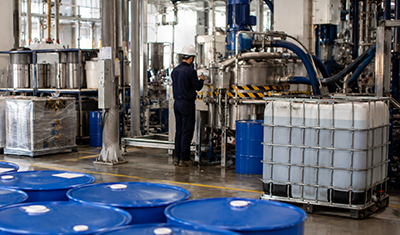
2. Review the Current Process
Next, we gather the context around the application. That may include:
- Chemistry you use today
- Materials being processed
- Equipment involved
- Application method
- Contamination or residue present
- Performance problem
- Required downstream operation
- Result you are trying to achieve
Depending on the problem, samples of the product, residue, scale, or other material may be useful. The more we understand the operation, the less we have to guess.

3. Determine What Needs to Change
At this stage, we may develop new chemistry, adjust an existing formulation, evaluate another approach, or identify a product that already fits the application. We do not assume every project needs to start from zero.
Sometimes, the best answer is a targeted modification. Sometimes, it is an existing formulation. And sometimes, the process itself is contributing to the problem.
We want the chemistry and the operation to work together.
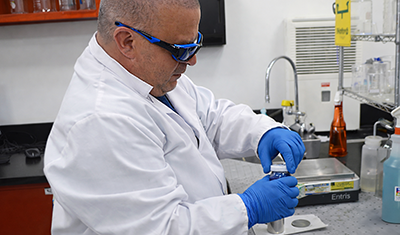
4. Test the Variables That Matter
Our lab capabilities help us move from observation toward a more controlled technical evaluation. Depending on the application, our testing capabilities include:
- Compatibility testing
- Stability testing
- Particle size measurements
- pH measurements
- Viscosity measurements
- Ink analysis
- Residue analysis
- Scale analysis
- Application simulation, where applicable
- Validation testing for new products
The testing strategy depends on the process problem. We focus on the variables that matter rather than running tests to create more data.

5. Evaluate Application Performance
Lab work gives us useful information, but the actual production process remains the final proving ground.
A formulation needs to be evaluated against the materials, equipment, operating conditions, and performance requirements it was developed around.
That is especially important in industrial environments where small process changes can affect results.
Temperature, contamination, contact time, mechanical action, and other variables can all change how the chemistry performs.

6. Prepare For the Right Production Scale
Once the chemistry has been evaluated for the intended application, we can discuss the path toward production and supply.
We support projects from pilot development through full-scale chemical production, with multiple packaging formats available based on the application and volume requirements.
This helps connect the formulation work to what you actually need on the plant floor.
Do You Need a Custom Formula or a Better Fit?
One of the most important parts of our job is knowing when not to overcomplicate the answer. A persistent chemical problem does not automatically mean you need a completely new formulation.
| Approach | When It May Make Sense |
|---|---|
| Use an existing product | A proven formulation already matches the application |
| Adjust the process | The chemistry works, but operating conditions are creating problems |
| Modify an existing formulation | The current approach is close but needs targeted changes |
| Develop a custom formulation | Standard options cannot consistently meet the process requirements |
We look at both the chemistry and the process. You may think the product is the problem when concentration, contamination, equipment conditions, or application practices are affecting performance. The opposite can also happen. Production teams sometimes spend months adjusting a process that is fundamentally mismatched with the chemistry.
Our job is to help narrow that down.
Industrial Applications for Custom Chemical Formulation
We work across industrial chemical categories where equipment, materials, contamination, heat, friction, and downstream requirements can create very different formulation needs.
Machining and Metalworking Processes
Machining fluids may need to manage heat, friction, tool interaction, part quality, system cleanliness, and downstream processing at the same time. When an existing fluid cannot consistently meet the demands of the operation, we look at the entire process. That may include the material being machined, equipment, tooling, operating conditions, fluid behavior, and what needs to happen to the part afterward.
Our work with machining fluids and the broader metalworking and fabrication industry gives us practical context for these conversations.
Metal Forming Operations
Drawing, stamping, bending, extrusion, and other forming operations can place heavy demands on process lubrication. The chemistry may need to reduce friction and support the operation while also fitting cleanup, surface condition, equipment, and downstream production requirements.
Our metal forming lubricants are part of our broader work with demanding metalworking processes.
When a standard option does not provide the right balance, we can evaluate the specific application and determine what needs to change.
Industrial Cleaning
Industrial cleaning is rarely as simple as asking which chemical is strongest. We need to understand:
- What needs to be removed
- What material is underneath it
- How the chemical will be applied
- What equipment is involved
- How much time is available
- What needs to happen next
Our industrial cleaners and degreasers support a range of cleaning applications. When an established cleaner does not fit a specific process, we can look more closely at the soil, substrate, equipment, and operating conditions.
Adhesives, Sealants, and Coatings
Adhesion problems can involve several variables at once. The chemistry, substrate, coating system, application conditions, surface condition, and downstream environment may all affect performance.
We manufacture adhesion promoters and work with manufacturers in adhesives, sealants, and plastisols.
When an application requires something outside a standard formulation, we can evaluate whether a custom blend makes sense.
Paint, Ink, and Coating Operations
Paints, inks, adhesives, resins, and coatings can create difficult cleaning and process challenges. Residue may be hard to remove. Standard cleaning chemistry may not work with the equipment or substrate. A process change may create a problem that did not exist before.
We work with paint, ink, and coating manufacturers on industrial chemical applications where process conditions matter.
Why We Use Lab Testing in Custom Chemical Development
Lab testing helps us turn a broad complaint into a more useful technical question. “Doesn’t work” is not a formulation target. We want to know what is happening and why.
Depending on the application, testing may help us evaluate questions such as:
- Is the chemistry compatible with the material?
- Is the formulation remaining stable?
- Is residue contributing to the problem?
- Are pH or viscosity relevant to the application?
- Can we better understand a scale, ink, or process material?
- Can part of the application be simulated before broader evaluation?
Our laboratory capabilities include:
- Compatibility testing
- Stability testing
- Particle size measurements
- pH measurements
- Viscosity measurements
- Ink analysis
- Residue analysis
- Scale analysis
- Application simulation, where applicable
- Validation of new or existing products
Testing does not replace production validation. It helps us move toward it with better information.
What Should You Bring to a Custom Formulation Conversation?
You do not need to have every technical answer before you contact us. You should, however, be ready to tell us what is happening.
Tell Us About the Problem
What is the process doing today? Are you seeing residue, corrosion, inconsistent cleaning, excess friction, poor adhesion, recurring buildup, or another issue? Tell us what the operators, maintenance team, engineers, or production managers are actually dealing with.
Tell Us What the Problem Is Costing Operationally
The consequence helps us understand the priority. Is the problem causing:
- Rework?
- Slower production?
- Additional cleaning?
- Rejected parts?
- Maintenance?
- Process instability?
- Downstream quality problems?
The chemistry should be evaluated in the context of the operation.
Tell Us What Needs to Improve
The desired outcome should be as specific as possible. Maybe you need better removal of a particular residue, or the current lubricant creates a cleanup problem.
Maybe a material or equipment change has made the old chemistry less effective. A clear target gives us something useful to evaluate.
Tell Us About the Materials and Equipment
We need to know what the chemistry touches and how it is used. That may include:
- Substrates
- Coatings
- Metals
- Plastics
- Elastomers
- Tanks
- Pumps
- Tooling
- Application equipment
Compatibility and process fit depend on the complete environment.
Tell Us What You Are Using Today
Available information about the current chemistry can help us understand the starting point. For some applications, physical samples of the current product, residue, scale, ink, or other process material may also support the evaluation.
How We Approach Custom Formulation at PICO
We are a hands-on industrial chemical team. When you come to us with a process problem, we want to understand the operation before we recommend what comes next.
Our custom formulation work involves (when applicable):
- Formulation development
- Technical collaboration
- Laboratory analysis
- Troubleshooting
- Pilot-scale development
- Full production
Our broader experience with industrial chemical products also gives us context across cleaning, lubrication, machining, forming, surface protection, adhesion, and other demanding manufacturing applications. That matters because chemical problems rarely exist in isolation.
A cleaner affects the next process, or a lubricant may affect cleanup. A surface treatment may affect adhesion, or a production change may create a compatibility issue somewhere else. We look at the full process as much as the chemistry itself. And we will not tell you that you need a custom formula simply because you called us about one.
Sometimes the right answer already exists, or the the process needs an adjustment. Sometimes additional testing is the logical next step, or the chemistry really does need to be developed around your specific requirements. Bring us the problem. We will help you work through it.
Frequently Asked Questions About Custom Chemical Formulation Services
A custom chemical formulation is chemistry developed or modified around a specific process, application, or performance requirement. We may explore custom formulation when standard products cannot consistently meet the needs of the equipment, materials, operating environment, or downstream process. We start with the problem you are trying to solve, then determine whether existing chemistry, a process adjustment, a modification, or a custom formula makes the most sense.
You should consider custom formulation when a chemical problem keeps affecting production and standard alternatives have not resolved it. That may include recurring residue, inconsistent cleaning, material compatibility concerns, poor lubrication, adhesion issues, or changing equipment and materials. We look at both the chemistry and the process before recommending the next step.
No. We may determine that an existing product already fits the application. In other cases, the process may need an adjustment, an existing formulation may need targeted changes, or a new formula may be appropriate. Our goal is to solve the production problem without making the answer more complicated than it needs to be.
The testing depends on the application. Our laboratory capabilities include compatibility and stability testing, particle size, pH, and viscosity measurements, analysis of ink, residue, and scale, application simulation where applicable, and validation testing for new or existing products. We focus on the tests that help answer the technical questions behind your process problem.
Yes. We support pilot-scale and full-production needs. Packaging options include pails, drums, totes, and bulk formats. The right path depends on the chemistry, application, development stage, and expected volume.
Start by telling us what is happening in the process. We will want to understand the problem, desired outcome, materials, equipment, application method, current chemistry, and known performance concerns. Samples may also be useful for certain types of laboratory evaluation.
Yes. We provide private label manufacturing and toll blending capabilities for appropriate projects. The exact fit depends on the formulation, production requirements, packaging needs, and project scope.
Bring Us the Process Problem
Manufacturers can get surprisingly good at working around bad chemical performance. Operators add another cleaning step. Maintenance manages the same buildup again. Production slows the line down. Purchasing tests another standard product. After a while, the workaround becomes part of the process. We would rather help you step back and ask why the problem keeps happening.
Our custom chemical formulation services give us a way to define the operating problem, evaluate the important process variables, test the relevant chemistry, and determine what actually needs to change. That may lead to an existing product, additional testing, a process adjustment, a modified formulation, or custom chemistry developed around the application.
Contact our team and tell us what is happening in your process. We will help you determine the most practical next step.
